40 J BB Pyroelectric Energy Sensor with 46 mm Aperture and Diffuser
40 J BB Pyroelectric Energy Sensor with 46 mm Aperture and Diffuser
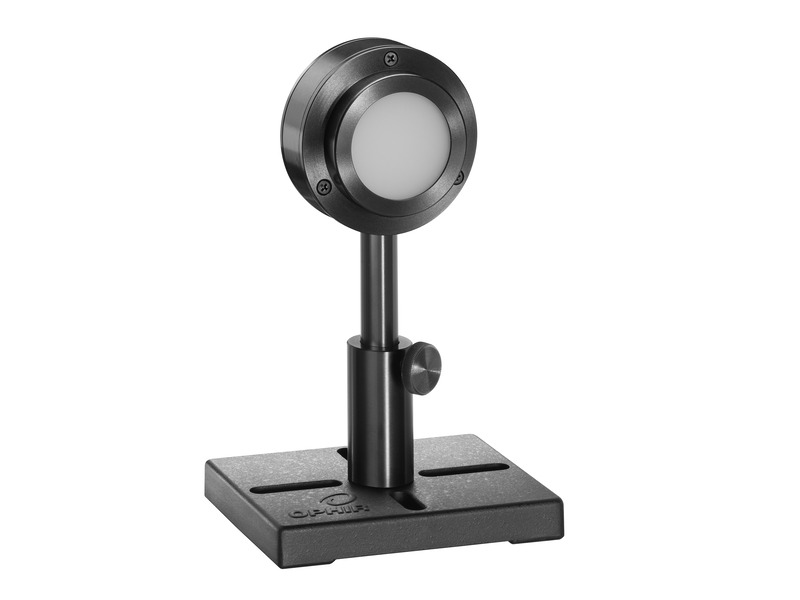
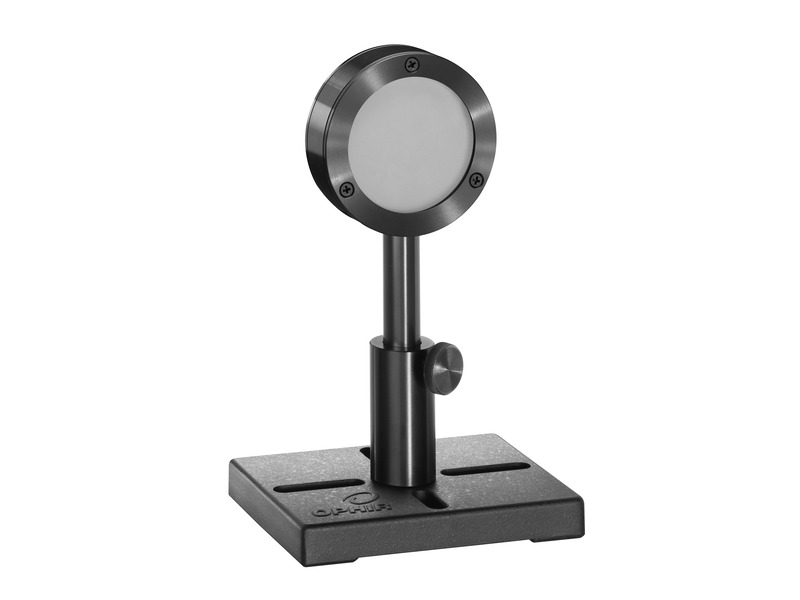
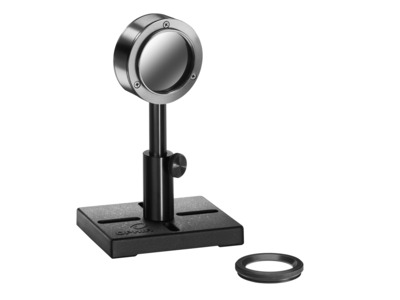
The PE50BB-DIF-C pyroelectric energy sensor has a removable diffuser that is spectrally flat with diffuser off. It has a 46 mm aperture with diffuser out and 33 mm aperture with diffuser in. It can measure energies from 0.1 mJ up to 40 J. It can operate at repetition rates up to 40 Hz and is calibrated from 0.19 to 20 µm with diffuser off and for 532, 1064 and 2100 nm with diffuser on.
- Broadband absorber with 0.19-20 µm spectral range
- 0.1 mJ to 40 J pulse energy measurement range
- Ø33 mm diffuser included for 400-2500 nm concentrated beams
- 20 ms maximum pulse width
- Repetition rates up to 40 Hz See All Features
Software
PE-C Sensors with StarLab
Support for PE-C \ PD10-C sensors with Vega, Nova II, Juno, Juno+, Juno-RS, EA-1, StarLite and StarBright in StarLab application is now available. Follow step-by-step instructions to upgrade the embedded software in the PE-C \ PD10-C sensor with the StarLab application
When working with other meters and interfaces it is not necessary to update the embedded software of the PE-C \ PD10-C.
Note: PE-C \ PD10-C sensors can't be upgraded via EA-1 interface..
Features
Measuring Laser Energy with a Pyroelectric Sensor
In this short “Basics” video, we review in general the use of pyro-electric sensors for measuring laser pulse energies.
Understanding Peak Power vs. Average Power
A pulsed laser could have an average power of, say, 1 Watt, yet a peak power of 1 Megawatt – so when specifying it’s rather important to understand the difference. In this video you will learn what exactly these 2 concepts mean. You’ll also learn how to measure Peak Power, which can sometimes be tricky.
Energy Sensor Response & Integration Time
There seems to be a good deal of confusion when it comes to the terms “Response time” and “Integration time” of energy sensors. In this video we will clarify the meaning of these terms, as they apply to Ophir’s pyro-electric “Smart Sensors”.
Laser Measurement Affected by Distance
Can a laser measurement depend on the distance from the laser to the sensor? The answer is…well, it’s not supposed to. But sometimes it does. In this video, you’ll learn what could make that happen - and what to do about it.
Accessories
Heat Sink
Scope Adapter
Beam Splitter Assembly for Pyro
Nova PE-C Adapter
PE-C to PE Size Adapter
Damage Threshold Test Plates (BB)
Fixed extension cables for Pyro Energy Sensors
Modular extension cables for Pyro Energy Sensors
Resources
Data Sheets
High Energy Pyroelectric Sensors 100µJ to 40J Datasheet(346.7 kB, PDF) Absorption and Damage Graph(220.6 kB, PDF) Wavelength and Repetition Rate Chart(178.6 kB, PDF)
Drawings & CAD
PE50BB-DIF-C & PE50-DIF-ER-C Drawing(162.9 kB, PDF)
Catalogs
Energy Sensors Catalog(4.6 MB, PDF) Laser Power & Energy Measurement and Laser Beam Analysis Catalog(27.5 MB, PDF)
Manuals
PE-DIF-C User Notes(371.6 kB, PDF)
Technical Notes
5 Situations Where Laser Performance Measurement is Necessary Effect of Ambient Conditions on Laser Measurements Oscilloscope Adapter for Ophir Pyroelectric Sensors Power/Energy Meters: Why Damage Specs are Derated for Larger Beams How to Properly Select a Laser Power or Energy Sensor
Technical Articles
Ophir Power/Energy Meter Calibration Procedure and Traceability/Error Analysis Laser Measurements in Materials Processing