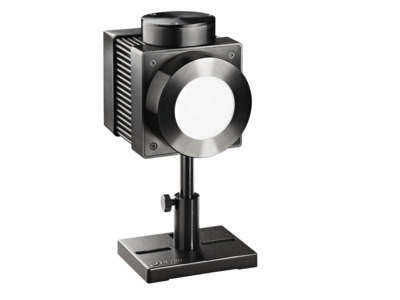
40 J BF Pyroelectric Energy Sensor with 53 mm Aperture and Diffuser
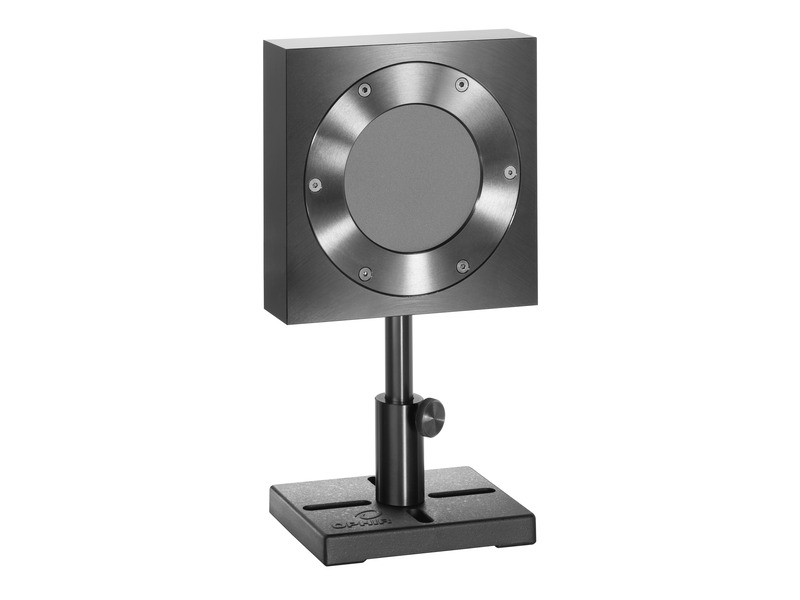
40 J BF Pyroelectric Energy Sensor with 53 mm Aperture and Diffuser
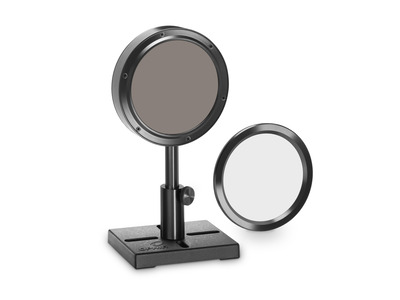
The FPE80BF-DIF-C pyroelectric energy sensor can measure high average power pulsed lasers up to 200 W. It has a high damage threshold diffuser for concentrated beams. It has a 53 mm aperture and can measure energies from 1 mJ up to 40 J. It has a damage threshold of 4 J/cm² for ns pulses. It can operate at repetition rates up to 250 Hz and covers the spectral range from 355 to 2200 nm and 2940 nm.
- BF absorber with a 355-2200 nm spectral range
- 1 mJ to 40 J pulse energy measurement range
- High damage threshold diffuser included for concentrated beams
- 20 ms maximum pulse width
- Repetition rates up to 250 Hz See All Features
Software
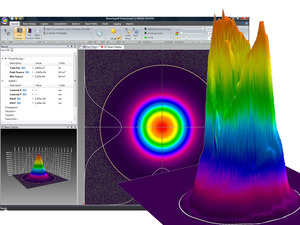
PE-C Sensors with StarLab
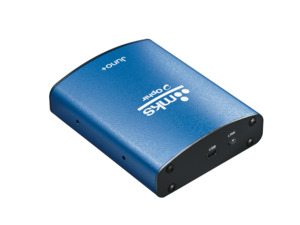
Support for PE-C \ PD10-C sensors with Vega, Nova II, Juno, Juno+, Juno-RS, EA-1, StarLite and StarBright in StarLab application is now available. Follow step-by-step instructions to upgrade the embedded software in the PE-C \ PD10-C sensor with the StarLab application
When working with other meters and interfaces it is not necessary to update the embedded software of the PE-C \ PD10-C.
Note: PE-C \ PD10-C sensors can't be upgraded via EA-1 interface..
Specifications
- Product NameFPE80BF-DIF-C
- Aperture SizeØ53 mm
- Aperture Size with DiffuserBF
- Spectral Range355-2200, 2940 nm
- Minimum Pulse Energy1000 µJ
- Maximum Pulse Energy40 J
- Maximum Frequency250 Hz
- Maximum Average Power200 W
- Maximum Average Power Density120 W/cm²
- Maximum Pulse Width20 ms
- Damage Threshold (100 ns)4 J/cm²
- Damage Threshold (2 ms)50 J/cm²
- DiffuserYes
- Cable Length1.5 m
- Dimensions90 x 90 x 127 mm
- CE ComplianceYes
- UKCA ComplianceYes
- China RoHS ComplianceYes
Features
Premium Energy Sensors – Even for UV
Meet Ophir’s high performance energy sensors for pulsed UV lasers (and not only for UV…). These sensors are the perfect solution for pulsed lasers at 193 and 248 nm.
Measuring Laser Energy with a Pyroelectric Sensor
In this short “Basics” video, we review in general the use of pyro-electric sensors for measuring laser pulse energies.
Energy Sensor Response & Integration Time
There seems to be a good deal of confusion when it comes to the terms “Response time” and “Integration time” of energy sensors. In this video we will clarify the meaning of these terms, as they apply to Ophir’s pyro-electric “Smart Sensors”.
Laser Measurement Affected by Distance
Can a laser measurement depend on the distance from the laser to the sensor? The answer is…well, it’s not supposed to. But sometimes it does. In this video, you’ll learn what could make that happen - and what to do about it.
Understanding Peak Power vs. Average Power
A pulsed laser could have an average power of, say, 1 Watt, yet a peak power of 1 Megawatt – so when specifying it’s rather important to understand the difference. In this video you will learn what exactly these 2 concepts mean. You’ll also learn how to measure Peak Power, which can sometimes be tricky.
Frequently Asked Questions
- How should I clean my sensor?Answer
First, clean the absorber surface with a tissue, using Umicore #2 Substrate Cleaner, acetone or methanol. Then dry the surface with another tissue. Please note that a few absorbers (Pyro-BB, 10K-W, 15K-W, 16K-W and 30K-W) cannot be cleaned with this method. Instead, simply blow off the dust with clean air or nitrogen. Don't touch these absorbers. Also, HE sensors (such as the 30(150)A-HE-17) should not be cleaned with acetone.
Note: These suggestions are made without guarantee. The cleaning process may result in scratching or staining of the surface in some cases and may also change the calibration. - What is the "User Threshold" feature on the Pyro-C series and how does it work?Answer
The Pyro-C sensors have a "user threshold" feature allowing the user to adjust the measurement threshold in noisy environments. Increasing the threshold will prevent triggering on noisy signals and allow accurate measurment of energy and frequency, as long as the laser pulses are larger than the noise.
The trigger level can be adjusted up to 25% of full scale, however operation depends on the pulse width setting. For pulse width settings below ~0.25ms, the minimum energy that can be measured accurately is approximately 40% above the user threshold setting. Pulses below this energy level will trigger the sensor down to the user threshold level, but accuracy is compromised.
For pulse width settings above ~0.25ms, accuracy is good all the way down to the threshold. If the laser pulse width is less than 1/2 the setting, the minimum energy corresponds to the setting. However, with longer laser pulse widths, the minimum energy will be higher, rising to approximately twice the user threshold level when the laser pulse width is equal to the sensor pulse width setting.
It is recommended always to set the user threshold to the minimum possible setting to retain best energy accuracy in any given situation. See the user manual for further information on how to use the user threshold.
- Are pyro sensors suitable for power measurement and if so, what is the accuracy?Answer
All Ophir pyroelectric sensors can measure average power with Ophir Power and Energy Meters. The instrument measures the number of pulses each second and multiplies the energy reading by the pulse rate. If the pulse rate is constant, then the accuracy of power measurement will be the same as the energy accuracy since the pulse rate measurement is very accurate.
- How does the pyroelectric sensor behave for pulsed radiation at a frequency which is over the data sampling rate?Answer
The Power and Energy Meters simply decides it is time for a sample and takes the next pulse that comes after that time, e.g. if it samples at 400 Hz, then every 1/400th of a second it is ready to take the next pulse that comes along.
- Can I use a PE-C pyroelectric sensor for higher powers for a short time without the optional heat sink?Answer
The catalog specification states the maximum power a sensor can be used with and without the heat sink. The purpose of the heat sink is to keep the sensor temperature below the maximum permitted at higher average powers. If you use the sensor for a short time only, on the order of 1-2 minutes at a time, you should be able to measure up to the higher power given in the spec even without the heat sink.
- Can a laser measurement depend on the distance from the laser to the sensor?Answer
In theory, if a beam is completely parallel and fits within the aperture of a sensor, then it should make no difference at all what the distance is. It will be the same number of photons (ignoring absorption by the air, which is negligible except in the UV below 250nm). If, nevertheless, you do see such a distance dependence, there could be one of the following effects happening:
- If you are using a thermal type power sensor, you might actually be measuring heat from the laser itself. When very close to the laser, the thermal sensor might be “feeling” the laser’s own heat. That would not, however, continue to have an effect at more than a few cm distance unless the light source is weak and the heat source is strong.
- Beam geometry – The beam may not be parallel and may be diverging. Often, the lower intensity wings of the beam have greater divergence rate than the main portion of the beam. These may be missing the sensor's aperture as the distance increases. To check that you'd need to use a profiler, or perhaps a BeamTrack PPS (Power/Position/Size) sensor.
- If you are measuring pulse energies with a diffuser-based pyroelectric sensor: Some users find that when they start with the sensor right up close to the laser and move it away, the readings drop sharply (typically by some 6%) over the first few cm. This is likely caused by multiple reflections between the diffuser and the laser device, which at the closest distance might be causing an incorrectly high reading. You should back off from the source by at least some 5cm, more if the beam is not too divergent.
Needless to say, it’s also important to be sure to have a steady setup. A sensor held by hand could easily be moved around involuntarily, which could cause partial or complete missing of the sensor’s aperture at increasing distance, particularly for an invisible beam.
- Do I need to recalibrate my instrument? How often must it be recalibrated?Answer
Unless otherwise indicated, Ophir sensors and meters should be recalibrated within 18 months after initial purchase, and then once a year after that.
- What are the differences between the old pyro sensors and the current “PE-C” line of pyro sensors? I can only find scattered information in the specs.Answer
The old pyro sensors and the newer PE-C sensors are almost identical. The differences between them are as follows:
- More compact
- User Threshold – minimum energy threshold (below which the sensor will not trigger) can be selected according to users' needs
- Measures longer pulses (up to 20ms depending on model)
- Has up to 5 pulse width settings as opposed to only 2 pulse width settings
Disadvantages:
Smaller size and therefore:- May need a heat sink (P/N 7Z08267) in order to stand up to higher average powers
- May need a mechanical size adapter (P/N 7Z08273) if it must fit into an existing mechanical jig designed for the older models
Meters and Software Support:
StarLite, Juno, Vega, & Nova II fully support the Pyro-C series. Laserstar, Pulsar, USBI, Quasar, and Nova / Orion with adapter* partially support the Pyro-C series:- Only 2 of the 5 pulse width settings are available
- Lowest measureable energy cannot be selected (no User Threshold).
StarLab software supports both Pyro-C and older pyro series.
*Note: The PE-C series will only operate with Nova / Orion meters with an additional adapter Ophir P/N 7Z08272 (see details in Ophir website).
Wavelength Setting Names:
If you have your own software for communicating with the sensor, it may be important to note that for some models, the names of the wavelength settings are a bit different between the old pyro and the new PE-C, even though they mean exactly the same thing.For example, with diffuser OUT, the settings in the PE50BB-DIF-V2 are called “<.8u” (i.e. visible, represented by a calibration point at 532nm that covers the full visible range), and “106” (i.e. 1064nm), while in the PE50BB-DIF-C these same settings are called “532” (i.e. 532nm, the calibration point for the visible) and “1064”.
- Are Pyro-C energy sensors compatible with all Ophir meters?Answer
Yes, with certain limitations. Here are the points to be aware of:
Vega, Nova II, StarLite, StarBright meters and Juno PC interface: Full support of all features
All other instruments (Nova/Orion and LaserStar meters, as well as USBI, Pulsar, and Quasar PC interfaces): Support the Pyro-C sensors, except for the following features: Only 2 of the 5 pulse width settings are available.
User selectable threshold is not available.
In addition to the above: When using a Pyro-C sensor with the Nova (or Orion) meter, the "Nova PE-C Adapter" (Ophir p/n 7Z08272) is required. - When logging pulse energy measurements on a PC using StarLab, what is the time resolution of the timestamps?Answer
When logging energy measurements on a PC with the StarLab software from a Pyro sensor via either a Nova-II, or Vega, or a USB enabled StarLite meter, the timestamp for each Energy pulse measured in the log is provided entirely by the clock on the PC which has millisecond resolution. (Note: Because a timestamp provided by a multitasking Windows PC is not from a true real time system, there could be instances where the timestamp is not well synced with the actual energy pulse measurement in the log, depending on how ‘burdened’ the computer was at any particular moment.)
When logging energy measurements on a PC with the StarLab software from a Pyro sensor via either a StarBright, Juno or Pulsar, each of these meters provides a precise microsecond resolution timestamp from their on-board clock.
This timestamp is synced to the Energy measurement and the data is written together in the log. The precise on-board clock in the StarBright, Juno or the Pulsar is used here to determine the time differences between measurements - rather than the PC clock which is used here just to set the initial baseline time of the log. This is the best method to log Energy if timing of pulses is critical.
As opposed to Pyro Energy measurements, when logging Power measurements on a PC via StarLab with either Photodiode or Thermopile sensors, where fast measurements are not required anyway, the log timestamp is provided entirely by the millisecond resolution clock on the PC when connected to any of our meters.
Accessories
Scope Adapter
Plugs in between the PE sensor and power meter. Provides BNC output to scope to see every pulse up to the maximum frequency of the sensor.
| Compare | Description | Drawings, CAD & Specs | Avail. | Price | ||
|---|---|---|---|---|---|---|
 | 7Z11012Scope Adapter, Connect PE to Oscilloscope |
Nova PE-C Adapter
The adapter plugs between the Nova D15 socket and the smart plug of the PE-C and PD-C sensors to allow the Nova to operate with these sensors.
| Compare | Description | Drawings, CAD & Specs | Avail. | Price | ||
|---|---|---|---|---|---|---|
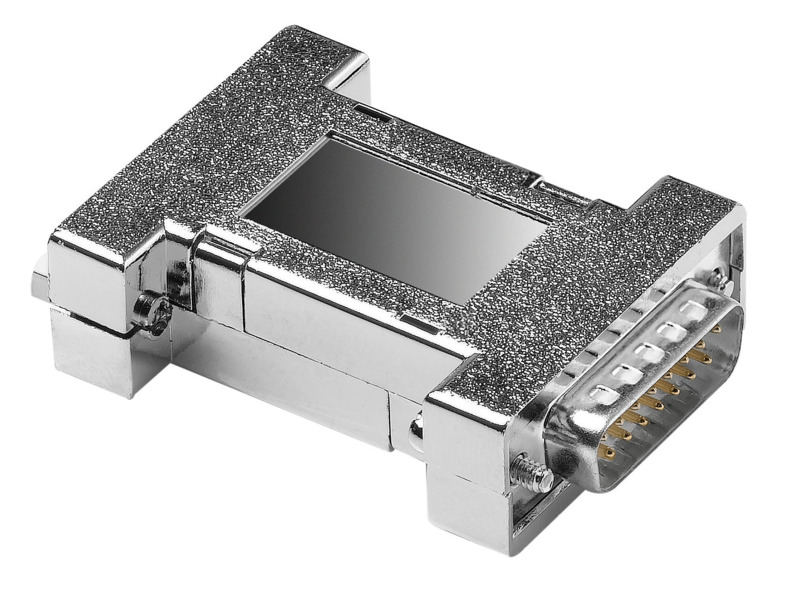 | 7Z08272Energy Sensor Adapter, Connect PE-C and PD-C to Nova Meter |
N Polarity Power Supply/Charger
Power Supply/Charger for Centauri, Vega, Nova II, LaserStar, Nova, EA-1, Pulsar, Quasar, 6K-W, 120K-W, 150K-W and fan cooled sensors.
| Compare | Description | Drawings, CAD & Specs | Avail. | Price | ||
|---|---|---|---|---|---|---|
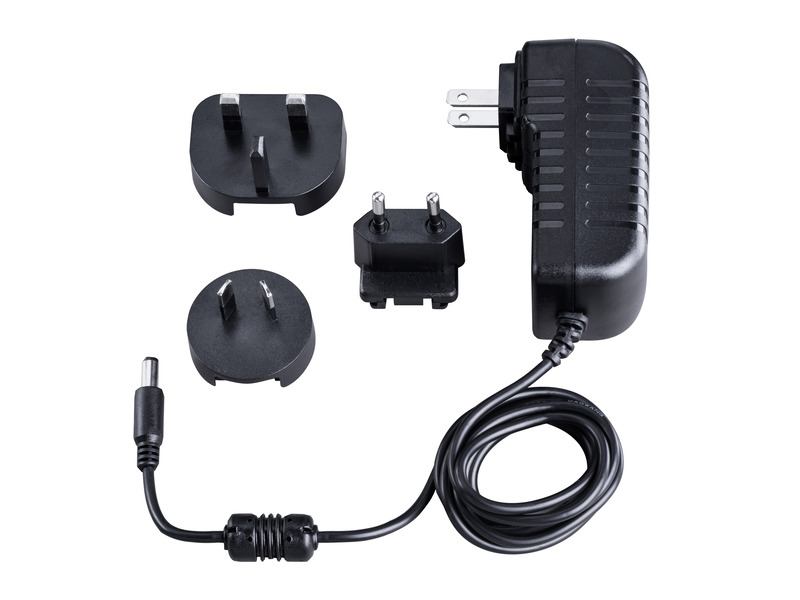 | 7E05029DC Power Supply / Charger, N Polarity |
Fixed extension cables for Pyro Energy Sensors
Order a fixed extension cable along with sensor to receive a different cable than the standard 1.5 m cable.
| Compare | Description | Drawings, CAD & Specs | Avail. | Price | ||
|---|---|---|---|---|---|---|
 | 7E01174AFixed extension cable for Pyro Energy Sensors, 3 m Length, Connect to Power Meter | |||||
| 7E01174BFixed extension cable for Pyro Energy Sensors, 5 m Length, Connect to Power Meter | |||||
| 7E01174CFixed extension cable for Pyro Energy Sensors, 10 m Length, Connect to Power Meter |
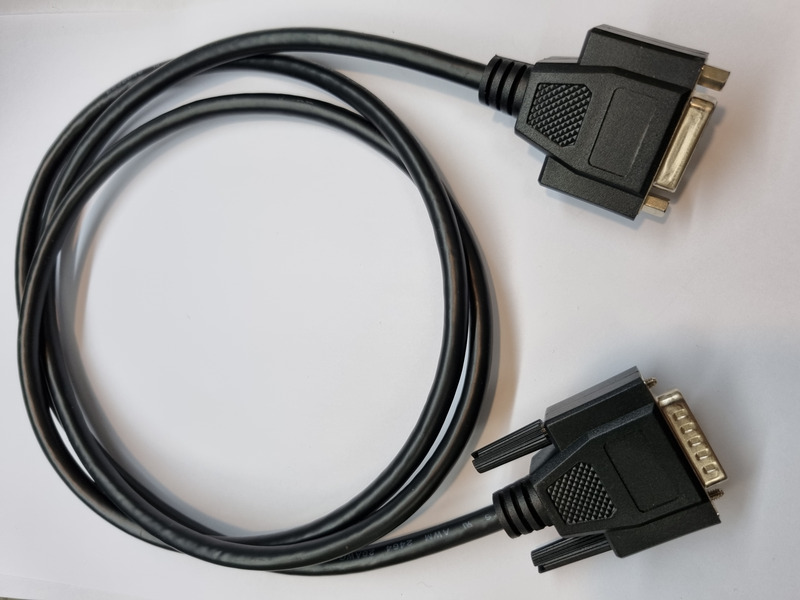
Modular extension cables for Pyro Energy Sensors
The extension cables can be ordered separately from the sensors.
Extended Warranty for Sensor
Customers that purchase the above items also consider the following items. Ophir-Spiricon meters and sensors include a standard manufacturers warranty for one year. Add a one year Extended Warranty to your meter or sensor, which includes one recalibration.
| Compare | Description | Drawings, CAD & Specs | Avail. | Price | ||
|---|---|---|---|---|---|---|
 | XWAR-SENSORExtended Warranty for Sensor |
Resources
Data Sheets
High Energy Pyroelectric Sensors 1mJ to 40J Datasheet(200.3 kB, PDF) Absorption and Damage Graph(220.6 kB, PDF) Wavelength and Repetition Rate Chart(178.6 kB, PDF)
Drawings & CAD
FPE80BF-DIF-C Drawing(171 kB, PDF)
Catalogs
Energy Sensors Catalog(4.6 MB, PDF) Laser Power & Energy Measurement and Laser Beam Analysis Catalog(27.5 MB, PDF)
Technical Notes
5 Situations Where Laser Performance Measurement is Necessary Effect of Ambient Conditions on Laser Measurements How to Properly Select a Laser Power or Energy Sensor
Technical Articles
Ophir Power/Energy Meter Calibration Procedure and Traceability/Error Analysis Laser Measurements in Materials Processing